

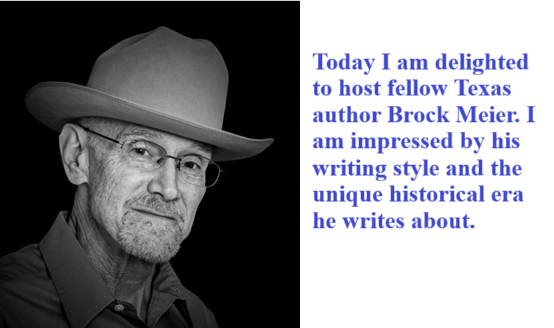
Welcome, Brock. Please tell us a little about your background.
Hi, Lyn. I’m happy to be here. After retiring from a 50-year career in scientific research (infrared, lasers, and human vision), I embarked upon a new and unintended career as an author of historical fiction. Unlike many authors, who pick up a crayon and write their first story at age 5, I had no early interest in becoming an author some day.
What made you start writing, and when?
About six years ago, a friend’s poem, which recounted the tragic story of a woman and her children caught in the violence of the Civil War, profoundly captured my attention and emotions. I found that the only way I could free myself of the inner turmoil was to write about it. Although never intending (or even desiring) to write a novel, in the space of six months I had completed a 128,000 word fictional account of this woman’s life, while still holding down my 40-hour a week research job.
How did you research the historical setting(s) of your book?
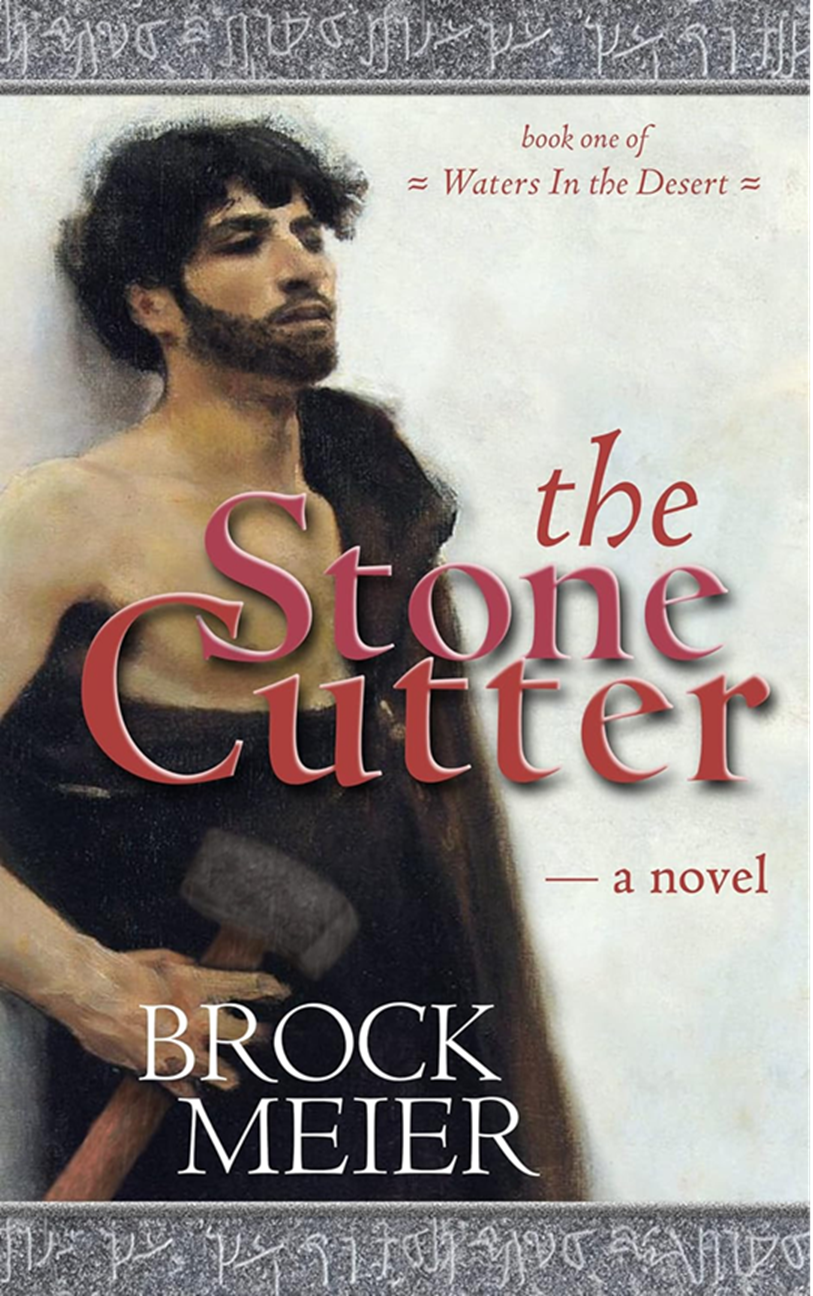
For my second (and first published) novel, The Stone Cutter, I made an educated guess as to where the protagonist lived—the Nabataean/Arabian Kingdom—and began to look into the matter, knowing next to nothing about it.
While there are almost no written archival materials left by the Nabataeans, their capital at the ancient city of Petra has a wealth of material history. Over the last 20-30 years, archaeologists have pieced together a vast catalog of the structures, art, coinage, and other things they left behind. I began immersing myself in archaeological studies and reports and now possess multiple shelves of books and over 300 archaeology reports in my iPad.
The deeper I got into the archaeology, the more fascinated I became with the Nabataean people and their culture. How they managed to turn the desert into a lush garden spot and agricultural center is a marvel. And the fact that a tribe of wandering shepherds and camel herders became an economic powerhouse to rival Rome is beyond astounding.
Have other authors influenced your writing? If so, please give one or two examples and tell us how they influenced you.
C. S. Lewis’s vast knowledge of classical literature, love of language, and his penetrating consideration of the human condition served to immunize his writing from triviality. His novel “Perelandra” (second of his trilogy) is a high-water-mark of looking into what makes humans do what they do. I strive in my own work to explore serious matters while remaining entertaining.
And the adventurer Carl Raswan’s lush, but realistic memoirs of living as a Bedouin have informed my own desire to paint with words the harsh beauty of nomad life.
Are your books published by a large publishing house or small press? If so, how did you come to be with this publisher? Or are you self-published? If so, what made you choose this route?
In my transition from science researcher to fiction author, I devoted six months to learning the arcane process of how to obtain representation by a literary agent, and eventually a publisher. The deeper I went, I began to realize how long the process could ultimately take, and in fact, the hoped for result might never happen. At the age of 70, I decided I couldn’t wait around forever.
After weighing the relative importance of professional representation, versus time spent actually writing and honing my craft, I opted to self-publish. In self-publishing, everything is in the author’s control. The self-publishing route may not be for everyone, but I am a do-it-yourselfer kind of guy, so I educated myself in the whole detailed process and got to work establishing my own imprint, Blue Sevens Publishing.
It’s not an easy choice to make. I hope it works out well for you. Are you planning or already writing another book? If so, tell us a bit about it – without revealing too much of the plot!
When I wrote my first published novel, The Stone Cutter, I thought it would be a one-off. But the Nabataeans’ history and culture so enraptured me, it is now becoming the series “Waters In the Desert,” all set in first-century Nabataea/Arabia. Almost no historical fiction exists set in Nabataea, so it is fallow, fertile ground for an author. I am currently writing the series’ next novel, based on the life of King Haretat’s second queen, Shuqilat.
According to accounts recorded in the Synoptic Gospels, in Luke’s history of the early church, and in some of Paul’s letters, the man Sha’ul (who is best known today as the Apostle Paul) spent somewhere between one and three years in Nabataea. And sometime in that period he managed to incur the wrath of King Haretat. My second novel explores how that animosity might have developed, and how it involved Queen Shuqilat.
Very intriguing! I look forward to reading that book. Once again, thank you, Brock, for visiting with us today.
Find Brock on these sites:
https://brockmeierauthor.com/brock-meier-author-blog/
https://www.youtube.com/@brockmeierauthor

 Lyn Horner's Corner
Hey Lyn!Inspiring….interview; thank you for sharing.🙏💜🙏Many Blessings,Lea Blankinshiplwbstudios.com
LikeLike
Thanks, lwb7. I’m glad you are inspired by this interview with Brock Meier. His writing is also inspiring.
LikeLike